
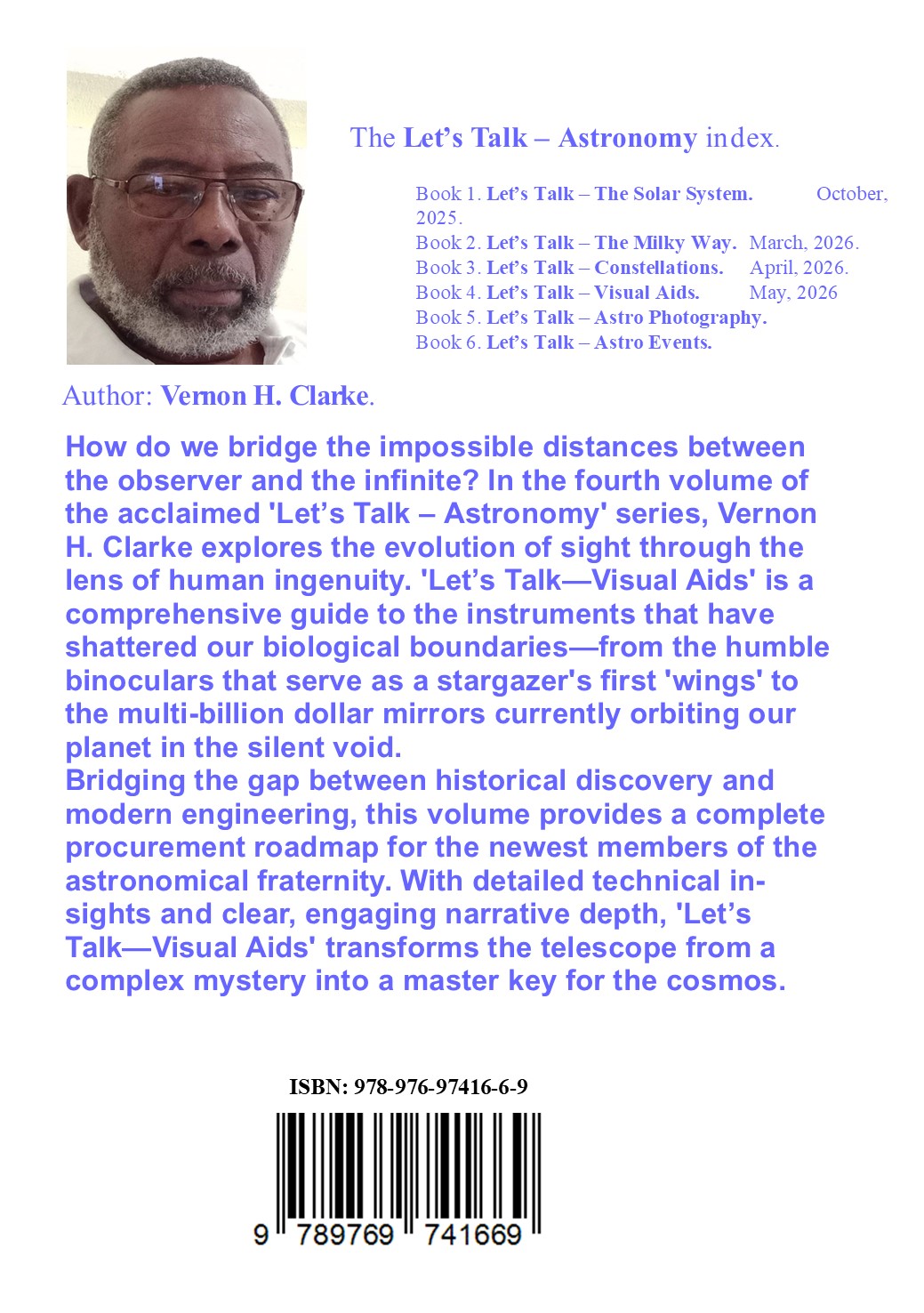
The Let’s Talk – Astronomy series stands as a landmark educational collection designed to strip away the intimidating barriers of astrophysics and replace them with a narrative of accessible discovery. Beginning with No. 1: The Solar System and No. 2: The Milky Way, the series meticulously establishes our cosmic neighborhood, anchoring the reader's understanding within the local planetary frameworks and the sweeping spiral structure of our home galaxy. With No. 3: The Constellations, the collection transitions into a masterful guide to celestial cartography, decoding 69 star formations to turn the night sky from a beautiful mystery into a legible, navigable map of human mythology and stellar science. Together, these initial volumes build the essential vocabulary of the heavens, charting what exists out in the vast, ink-black dark.
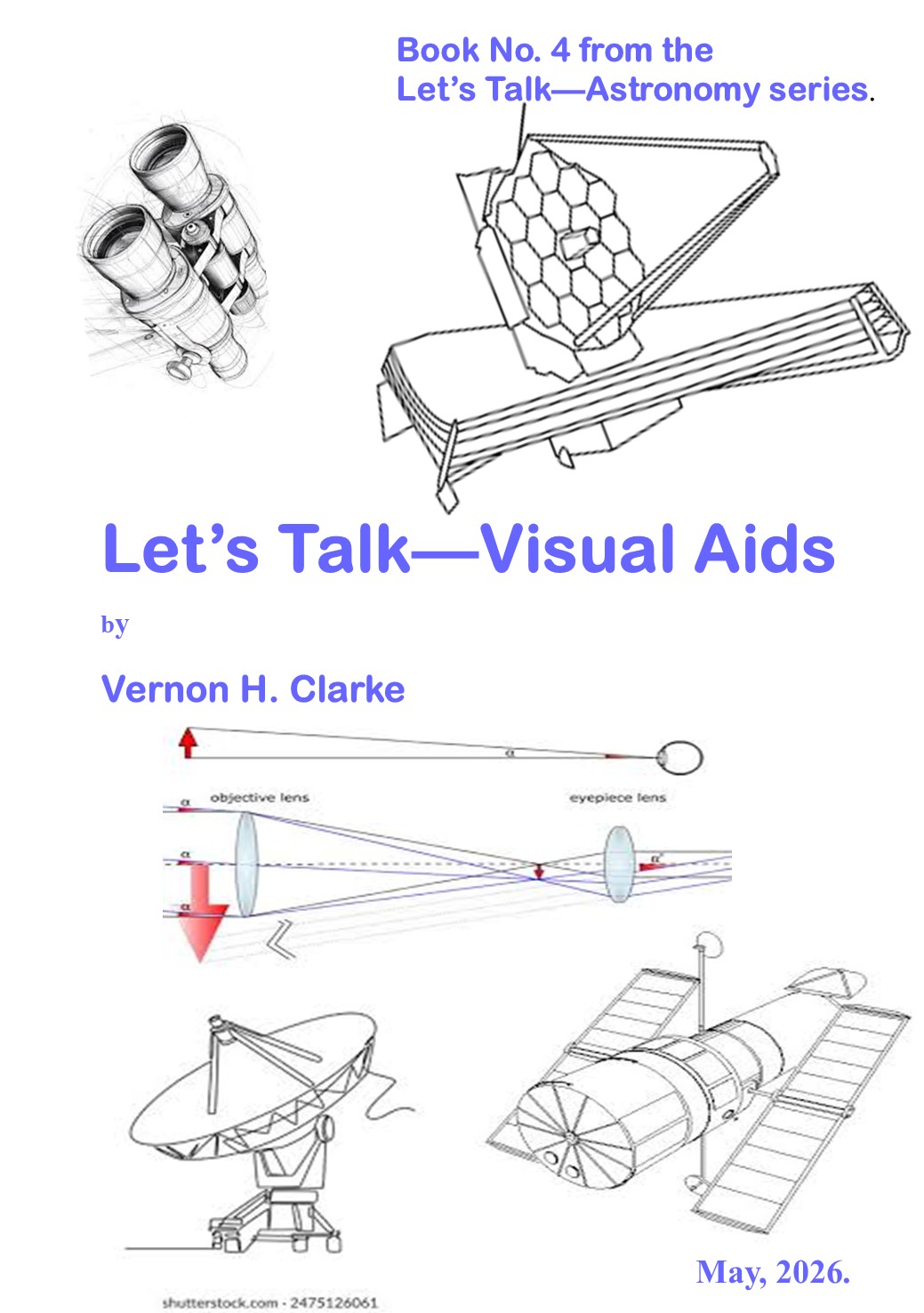
However, it is with No. 4: 'Let’s Talk – Visual Aids' that the reader arrives at a profound and meaningful threshold in the overarching conversation. While the first three volumes expand our knowledge of celestial architecture, Visual Aids completely redefines our relationship to it. It shifts the dialogue from passive wonder to active observation by unpacking the incredible evolution of human sight. This volume serves as the series' vital technical engine, bridging the gap between ancient curiosity and cutting-edge engineering. By deconstructing how glass lenses, segmented mirrors, and multi-dish radio arrays physically capture and focus ancient photons, it equips the stargazer with the "how" behind every discovery.
Visual Aids represents the exact threshold where the reader steps out of the classroom and onto the observing field. It transforms the telescope from an intimidating maze of optics into a familiar, authoritative tool, paving the way for the advanced photographic techniques introduced in the volumes to follow. By revealing the mechanics of how humanity has extended its spirit into the void, Book No. 4 elevates the entire series from a simple guide into an empowering, lifelong manual for the global astronomical fraternity.